
Overwhelmed by the huge choice of Pilates kit, accessories and equipment out there? Discover the must-have accessories Pilates instructors are using every week – and which items are best left on the shelf
When you’re taking up a new sport or activity, trying to work out what kit, accessories and equipment you need can feel overwhelming – and Pilates is no different.
From grippy socks to ankle weights, there a lot of conflicting advice out there on what kit and accessories are ‘essential’ to get the most out of your classes – even among instructors. And when you just want to focus on your workout, the last thing you need is to be wasting time and money testing out kit that never belonged on a reformer in the first place.
We caught up with Lottie Anderson, Pilates instructor, busy mum and founder of Bondi Rise, to get the low down on which Pilates accessories she uses regularly and are worth the investment – and which kit is best left in the cart. ‘Lots of people ask me what I actually use week to week, and the list is shorter than you’d think,’ Lottie comments. ‘Here’s what’s genuinely in my weekly rotation.’
Grippy socks
The grippy-socks-or-barefoot debate is a divisive one in the Pilates world – but Lottie is firmly on the side of the grippy socks, earning them top spot on her list of kit essentials. ‘If you do Pilates and you don’t own a pair of grippy socks, this is your sign,’ she tells us. ‘They’re not a nice-to-have, they’re the whole thing.’
While going barefoot can offer more grip than regular socks, sweat can start to interfere with how much grip your soles provide. In contrast, grippy socks offer a consistent level of secure grip, which is vital in a Pilates class – especially reformer. ‘Without grip, you’re slipping around the reformer and losing half the benefit of every single exercise,’ Lottie explains. ‘I have grip socks in my gym bag, my son’s nappy bag, the car, the studio…they are everywhere.’
High-waisted leggings
As with any exercise, you want to feel supported but unrestricted by your clothes while practising Pilates. You might be tempted to opt for looser clothes to achieve this freedom of motion. But flowy or baggy clothes can get in the way of your practice – or even get tangled up in the reformer.
Instead, Lottie recommends investing in a pair of supportive, high-waisted leggings. This is what she always opts for herself when teaching, practising, filming or simply out walking with her baby. ‘A good pair of high-waisted legging holds you in all the right places without restricting movement, and for Pilates that matters,’ she explains. ‘You want to move freely, feel your body, and not be constantly adjusting what you’re wearing.’
Hand weights and ankle weights
The world of Pilates equipment is vast and varied. From Pilates balls and rings to entire machines, it can be tricky to know what gear to invest in when you’re building a home set-up. But despite the huge surge in home reformers and budget-breaking equipment, Lottie recommends keeping things simple, especially if you’re a beginner.
If you’re practising mat Pilates at home and want to up the intensity of your workout, she is a big fan of hand and ankle weights. And the good news is, you don’t have to go big to feel the difference. ‘My students are always surprised by how much they feel it,’ she explains. ‘I use 1-2kg hand weights in so many of my classes and at home because adding a small amount of resistance to a Pilates move changes the whole exercise.’
‘If you’re doing mat work at home, a pair of hand weights is one of the best things you can add in,’ she adds. ‘They are small, light and more effective than people expect. For your lower body, a 0.5-1kg ankle weight on a glute or leg series takes it from manageable to genuinely hard. In a good way!’
Resistance bands
Small, budget-friendly and portable, resistance bands are another great option to add to your home Pilates set-up. ‘I use these every single week,’ says Lottie. ‘They’re light, they travel, and you can do a full session with just a band and a mat.
One of the best things about resistance bands is their versatility. ‘They’re great for glute work, for upper body work, and even for assisted stretches,’ comments Lottie. ‘All in all, they’re an absolute non-negotiable for home workouts.’
Pilates accessories to avoid – according to an instructor
So, grippy socks, high-waisted leggings and resistance kit all get the thumbs up from Pilates guru Lottie. But which kit has no place in the studio?
Trainers – or shoes of any kind
While many forms of exercise benefit from the stability and cushioning provided by trainers, Pilates is not one of them. ‘Pilates is best done in grippy socks or bare feet,’ Lottie explains. ‘Trainers create a barrier between you and the reformer or mat. You lose the feedback your feet are giving you.’
And the same applies to any shoes, which Lottie believes are best left off the mat. ‘If you want to walk before or after, brilliant. But in the studio, leave your shoes at the door.’
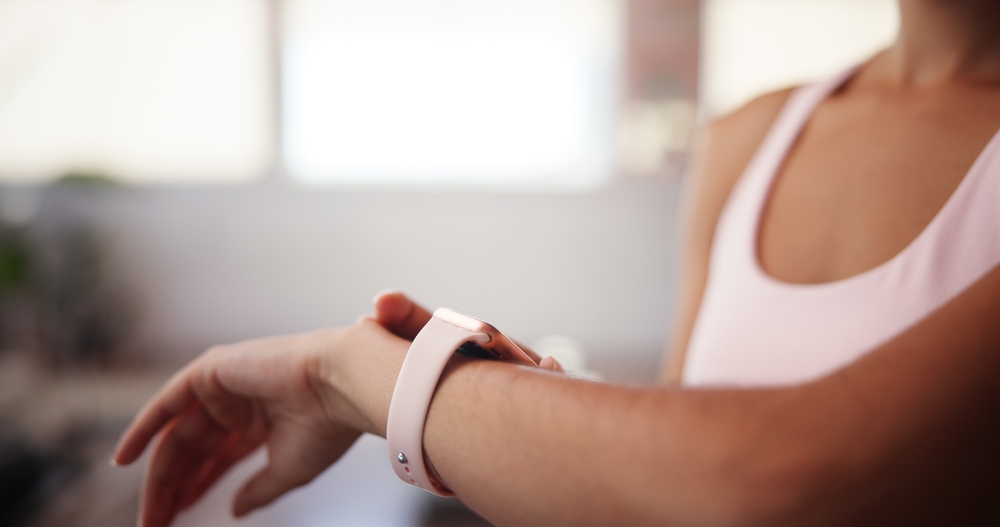
Fitness watches
This one is sure to divide a lot of people. After all, there has been a huge surge in the popularity of fitness watches in recent years, with millions consistently donning wearable trackers every time they move.
But for Lottie, tracking metrics during Pilates can detract from the practice itself, causing you to be more focused on the number of calories burnt, rather than how you feel in your body.
‘If I finished a class and it told me I only burned 180 calories, I don’t want that in my head,’ she tells us. ‘I just don’t want to know. I exercise to feel strong, calm and more like myself. My advice to anyone would be to train for how you feel, not for a number.’