
From sleep scores and HRV to step counts and recovery metrics, wearable devices can offer valuable insights. But psychologists say trusting the numbers more than your own body could come at a cost
From the Oura ring to the Apple watch, fitness trackers have exploded in popularity and transformed the health industry. Once a niche and new trend, wearable technology is now firmly integrated into our lives as we strive to keep a track on our wellbeing and fitness goals.
That said, whilst they can provide valuable insights into our health, they may also spark anxiety over what the constant metrics are doing to our brains. To put it simply: the stats from your device can often dictate how you have performed and feel and if the results are not good, you can feel deflated.
Although there has not been enough evidence to point to the dangers of using fitness devices v low mood, numerous wearers are noticing this effect, leading to medical experts and psychologists warning of the negative impact they can have.
“We live in an era where health tracking is becoming easier than ever,” explained Canadian running coach and longevity expert Marwa Ahmed, CEO of the training website https://www.thebmcoach.com/
“We can track sleep through Oura rings, fitness through our Apple or Garmin watch, sweat through our Whoop, etc. The most common problem I see in using tech for fitness/health tracking is what I describe in my practice as “data dissonance” – when there is a gap between how you feel and what the tracker says.
“Who do you listen to? Most people follow the numbers, not what they feel. For example, you wake up fully rested and energized, check your Oura ring and your sleep score is 50% with no deep sleep. Suddenly you doubt yourself, did I actually not sleep that well? That’s the moment the tech created to work for you works against.
“The wearable is no longer a device that gives you insights. It starts to dictate how you feel and what you should do. Psychologically, it’s hard to argue with my clients against numbers. People love numbers they can look at, measure against time, and create trends out of. That’s absolutely true, but it’s also important to understand that numbers are not always 100% accurate and that there’s an algorithm behind it that is not fault proof.”
Data overload
While fitness and health trackers can provide a remarkable amount of data, there is the potential for data overload and one area of concern when it comes to this is, unsurprisingly, sleep. This is something that Dr. Eric Zhou, Associate Professor at Harvard Medical School in the Division of Sleep Medicine, is an expert in.
“About ten years ago, researchers in Chicago coined the term ‘orthosomnia.’ This describes a fixation on achieving perfect sleep metrics, often based upon data from wearable sleep trackers, like the Fitbit or Oura ring.
“Unfortunately, the anxiety that is created by trying to create perfect sleep is often associated with worse sleep. You see, there is a very real placebo effect to sleep. Believing that you are sleeping longer or better is actually associated with how well you feel or perform during the day. I advise patients who use sleep trackers to look at the data every month or so to get a sense of how they are trending on a week-to-week basis.
“Once they zoom out and understand that sleep patterns over weeks are more important than a single good or bad night, it helps to reduce their anxiety about performing each and every night.”
As someone who myself wears an Apple watch and is constantly checking I’ve reached my 10,000 steps a day, I know only too well the sense of joy and satisfaction it brings when I’ve hit that target. On the days I don’t achieve it, I can confess to feeling disappointed but, fortunately, it does not effect my mood.
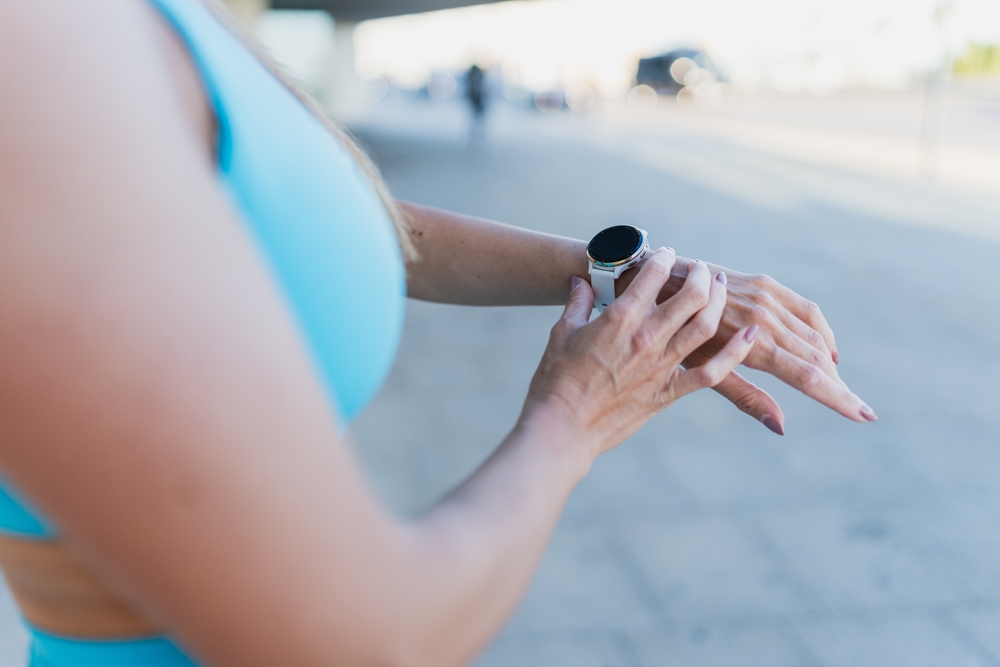
That said, I am one of those people that fall into the “constantly checking” category. This is explained by psychologist Rod Mitchell, founder of the therapy clinic https://www.emotionstherapycalgary.ca/ who has seen “a large number of clients having developed health-related anxiety issues due to fitness wearable use.
“What usually happens is that they get caught in a reassurance loop – checking their wearable data eases the stress and worry they’re experiencing, and that feeling of relief creates an urge to keep checking.
“Our health can feel like a very unpredictable part of our life, and fitness wearables provide us with a false sense of certainty. If we are already experiencing a high level of anxiety from other parts of our life, it can become very difficult to stop looking at the device.
“Sleep tracking is where I see this loop come up the most. Fitness wearables don’t always accurately track how you actually slept, and a poor score can ruin your entire morning – even when there was nothing wrong with how you slept.” To help his clients break out of the “constantly checking” loop, he uses a technique called Response Prevention.
“I advise them to choose a specific time per day when you will check your data – if you experience an urge to check it outside of that time, let the urge to look rise and then fade. Acknowledging the urge out loud helps you to not act on it: “I’m noticing that I want to check my data right now”. With each urge to check that you resist, the loop becomes weaker and weaker.”
Misleading readings
As with many people who purchase the Oura ring for example – my husband included – their hope is it will help them monitor their body statistics religiously. Having worn his ring for a year in a bid to help him get better sleep and more in tune with his body, I’ve seen the opposite in fact happen. He’s become so reliant on the device that when he goes to bed early because his previous night’s sleep score was bad, and he can’t fall asleep, his mind starts to race. As New York psychotherapist Katherine Berko points out, however, one poor sleep reading can be totally misleading.
“The hope when people purchase the Oura ring or monitor their fitness trackers religiously is that they will become healthier and more in touch with their bodies, but the opposite can ensue. Their attention may shift from lived bodily experience toward external metrics. Instead of intuiting how they feel, people start asking their devices to tell them.
“One poor sleep score, fluctuation in heart rate or missed fitness goal can be blown out of proportion, creating a cycle of self-monitoring that leaves folks feeling less connected to themselves.
“These devices are reflective of a larger cultural trend. In the same way that people are relying more on AI to tell them what to think, fitness tracker data can become conflated with how a person actually feels physically in their body.
“Rather than tolerating ambiguity and exploring their experiences, people are looking to an external authority for an immediate, definitive answer. The risk is they’re becoming less confident in their capacity for reflection and intuition. Instead of using these tools as aids, they begin to treat them as undeniable reality.”
To summarise, it does seem that fitness devices are not necessarily always a good thing, particularly if you are someone with a high level of stress and anxiety to begin with. The irony is that technologies designed to increase self-awareness are, in some cases, leaving us more disembodied from ourselves!