
Think bigger isn’t always better when it comes to movement? Pilates instructor Rebecca Dadoun says that for people living with persistent pain, small, controlled exercises can help rebuild confidence, improve body awareness and lay the foundations for stronger, more comfortable movement.
Words: Rebecca Dadoun
Pics: Getty Images
Why smaller movements can make a big difference
When we think about reducing pain or improving mobility, we often picture big, powerful movements: squats, deadlifts, lunges or long sessions on the mat. But for many people, particularly those living with persistent or chronic pain, some of the most important work can come from much smaller, more controlled movements.
These micro-movements are the foundations that support everything we do, both in the gym and in everyday life. They can help us develop better movement patterns, improve body awareness and rebuild confidence in movement in a way that larger, higher-load exercises can’t always achieve on their own.
Start with your breath
One of the most overlooked micro-movements is breathing. We rarely think of breathing as movement, but it is one of the body’s most important mechanical actions.
Learning to breathe well means understanding how the diaphragm moves, how the rib cage expands and contracts, and how the breath coordinates with the rest of the body.
In Pilates, breathing is deliberately paired with movement, creating a rhythm that can support stability, control and relaxation. Slow, controlled breathing may also help shift the body away from a heightened stress response – something that can be particularly useful for people experiencing persistent pain, where the nervous system may become more protective.
When breathing becomes smoother and more efficient, movement can often follow.
f/4 · 1/200s · 70mm · ISO200
Teach your body to move independently
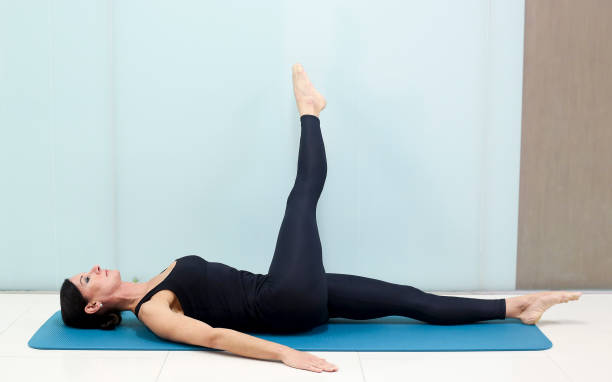
Another important micro-movement skill is learning to dissociate the movement of the limbs from the trunk and pelvis.
It sounds simple, but it can be surprisingly challenging. Lying on your back and moving one leg while keeping your pelvis and trunk relatively stable, for example, teaches the body to create movement at the hip without unnecessary compensation elsewhere.
People experiencing pain may unknowingly brace, twist or shift through the spine or pelvis when moving their limbs. Practising these smaller movements gives the body an opportunity to explore different movement patterns in a controlled, low-load environment.
Small movements are the building blocks of bigger ones
These details might seem insignificant, but they are the foundations of larger movements.
A squat, deadlift or lunge requires different parts of the body to move and stabilise in coordination. If these foundational skills haven’t been developed, larger movements can feel unstable, uncomfortable or difficult to control.
Micro-movements provide an opportunity to practise these skills without the additional demands of heavy weights or complex movement patterns.
Think of them as learning the individual notes before playing the whole song.
They can help rebuild confidence in movement
For someone experiencing persistent pain, movement can become associated with fear.
You might worry about bending, lifting, twisting or moving in a particular direction because you’ve previously experienced discomfort. That fear can lead to avoiding certain movements altogether, potentially making everyday activity feel increasingly difficult.
Small, controlled movements offer a way to explore movement gradually and with a greater sense of control.
Being able to move a leg, shoulder, hip or rib cage without discomfort can help rebuild confidence in what your body is capable of. Over time, that confidence can be transferred to larger movements and everyday activities.
Improve your sense of where your body is
Micro-movements can also help develop proprioception – your body’s ability to sense where it is in space.
When movement becomes less familiar or pain changes the way you move, you may become less aware of how different parts of your body are positioned and moving. Slow, controlled exercises encourage you to pay closer attention to these sensations.
This increased awareness can help you identify unnecessary tension or compensation and develop greater control over how you move.
Micro-movements aren’t a replacement for strength training
Importantly, micro-movements shouldn’t be viewed as a replacement for strength training. They’re complementary approaches.
Pilates, mobility work and strength training can all play different roles in developing better movement. Micro-movements can help you understand and control your body, while strength training allows you to apply that control under increasing levels of load.
Together, these approaches can help make movement feel more coordinated, controlled and efficient.
You don’t need a gym to practise them
One of the biggest advantages of micro-movements is their accessibility.
They can be practised on the floor, on a mat, at home or in a studio. You don’t necessarily need equipment, and you don’t need to be particularly fit to begin exploring them.
What they do require is attention.
For someone living with pain, that opportunity to slow down, tune in and pay attention to how their body moves can be valuable. Instead of immediately asking the body to perform a large or demanding movement, you can start by exploring the smaller components that make it possible.
Small doesn’t mean insignificant
Micro-movements aren’t powerful simply because they’re easier. Their value lies in their precision.
They give us an opportunity to practise breathing, stability, coordination and control without immediately adding the demands of speed, complexity or heavy loads. Those skills can then become the foundations for bigger movements.
For anyone experiencing persistent pain – or simply wanting to move with greater awareness and control – small, intentional movements can be a useful place to start.
Micro-movements to try
1. Diaphragmatic breathing
Lie on your back with your knees bent and feet flat. Place one hand on your chest and one on your lower ribs. Breathe slowly through your nose, aiming to feel your lower ribs gently expand rather than lifting your shoulders. Exhale slowly and repeat for five to 10 breaths.
2. Pelvic tilts
Lie on your back with your knees bent. Gently tilt your pelvis so your lower back moves towards the floor, then slowly release back to neutral. Keep the movement small and controlled. Repeat 8–10 times.
3. Heel slides
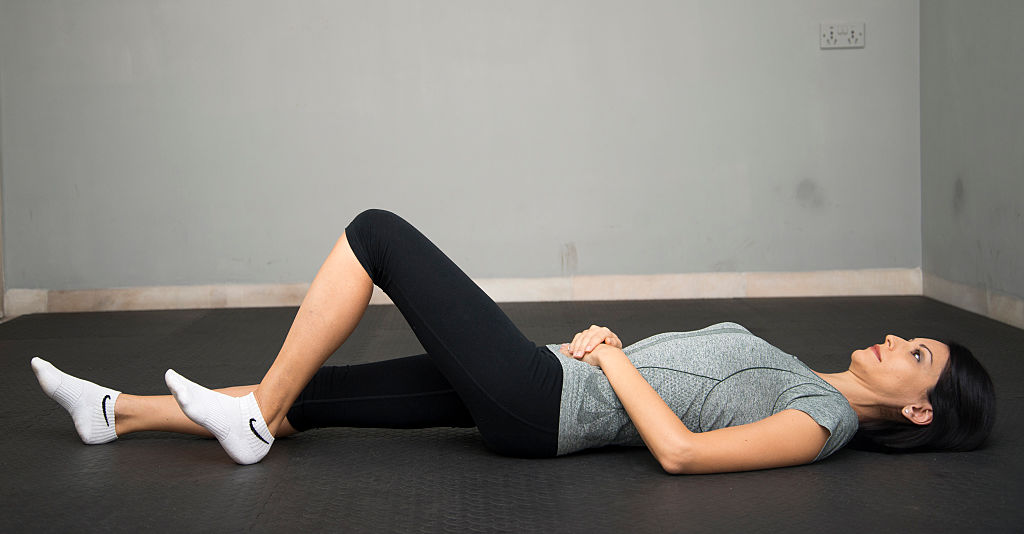
From the same position, slowly slide one heel away from you, then bring it back without allowing your pelvis to rock from side to side. Alternate legs. This practises moving the hip while keeping the trunk controlled.
4. Knee drops
Lie on your back with both knees bent and feet on the floor. Slowly allow one knee to fall a few inches towards the side, then bring it back to centre. Keep the opposite side of your pelvis as still as possible. Repeat on the other side.
NIKON D800E · f/4.2 · 1/250s · 46mm · ISO200
5. Shoulder blade movements
Sitting or lying down, gently draw your shoulder blades towards each other, then allow them to relax and move apart. Keep your shoulders relaxed rather than shrugging. Repeat slowly for 8–10 repetitions.
6. Ankle circles
While seated or lying down, lift one foot slightly and make small, controlled circles with your ankle. Reverse direction and repeat on the other side. This is a simple way to practise joint movement and body awareness.
7. Chin nods
Lie on your back with your head supported. Without lifting your head, gently nod your chin towards your chest, creating a very small movement. Hold for a couple of seconds before relaxing.
8. Single-leg marching
Lie on your back with your knees bent. Slowly lift one foot a few centimetres from the floor, then return it. Repeat with the other leg, trying to keep your pelvis steady throughout.
Rebecca Dadoun, the founder of Pilates Prescription, a popular online platform redefining Pilates as a mindful, inclusive and longevity focused approach to movement.